Watercolor Dragonfly Patterns: A Design Evaluation
Watercolor dragonfly patterns represent a specific niche within digital graphic assets, combining the organic fluidity of watercolor painting with the intricate anatomy of dragonflies. For designers, crafters, and content creators, these assets serve as high-resolution backgrounds or texture overlays intended to evoke themes of nature, tranquility, and elegance. This evaluation explores the characteristics, applications, and practical considerations of using this specific aesthetic in professional and personal projects.
Understanding the Asset Category
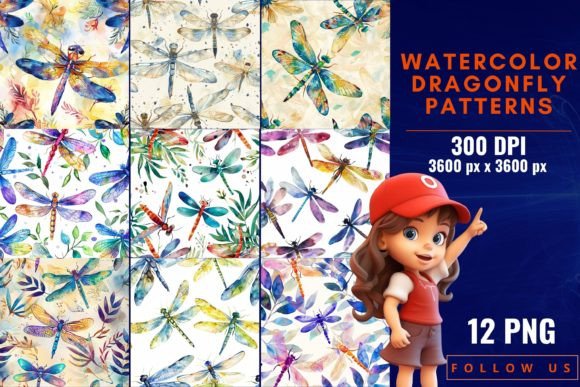
A watercolor dragonfly pattern typically consists of digital illustrations where dragonflies are rendered using techniques that mimic traditional wet-on-wet or wet-on-dry watercolor methods. Unlike vector graphics which rely on sharp mathematical lines, these images prioritize soft edges, color bleeding, and translucent layering. The collection often features multiple variations, ranging from vibrant, saturated hues to softer, pastel palettes, all set against soothing backgrounds that may include subtle textures like paper grain or water stains.
The core value proposition lies in the ability to capture a sense of movement and fragility. Dragonflies are symbols of change and adaptability, and when paired with the ethereal quality of watercolor, they create a visual language that is both whimsical and serene. These patterns are generally distributed as high-resolution raster files, ensuring that the delicate details of the wings and body remain clear even when scaled for print or large-format displays.
Primary Applications and Use Cases
Individuals seeking watercolor dragonfly patterns usually do so to infuse a project with a specific emotional tone. The following scenarios highlight where these assets provide the most significant impact:
- Event Stationery: The delicate nature of the artwork makes it an ideal choice for wedding invitations, baby shower cards, and bridal shower programs. The soft colors avoid the harshness of modern geometric designs, creating a romantic and inviting atmosphere.
- Wellness and Lifestyle Branding: Brands focused on yoga, meditation, spa services, or natural skincare often utilize these patterns to communicate calmness and organic origins. The imagery aligns well with values of mindfulness and connection to nature.
- Digital Content Creation: Bloggers and social media influencers use these backgrounds for headers, quote graphics, and presentation slides. The "ethereal" quality helps text stand out while maintaining a visually pleasing, non-intrusive backdrop.
- Textile and Product Design: High-resolution versions of these patterns can be licensed for printing on fabric, wrapping paper, or stationery sets, provided the file resolution meets the specific requirements of the printing vendor.
Evaluating Benefits and Tradeoffs
When deciding whether to incorporate watercolor dragonfly patterns into a workflow, it is essential to weigh the artistic benefits against technical limitations.
Key Benefits
The primary advantage is the unique aesthetic quality that is difficult to replicate with standard clip art or solid colors. Watercolor textures add depth and character, preventing designs from appearing flat or generic. Furthermore, the versatility of the color palette allows for easy customization; designers can often blend these images with other elements to create a cohesive brand identity without clashing colors. The high resolution ensures that the final output maintains clarity, which is critical for print materials where pixelation would ruin the delicate effect.
Potential Drawbacks
However, there are tradeoffs to consider. Because these are raster-based images (pixels), they lack the infinite scalability of vector graphics. If a user attempts to enlarge a low-resolution version beyond its native dimensions, the image may become blurry or pixelated, losing the fine details of the dragonfly wings. Additionally, the soft, light nature of watercolor can sometimes struggle against dark backgrounds or busy layouts, potentially reducing readability if not managed carefully.
Another consideration is the specificity of the theme. While dragonflies offer a broad appeal, they are still a distinct subject matter. Projects requiring a more corporate, industrial, or abstract look may find these patterns too decorative or thematic, limiting their applicability across different types of business communications.
Decision-Making Factors
To determine if this asset class aligns with your goals, consider the following criteria regarding your target audience and project requirements.
When It Is a Strong Fit
This style is highly recommended when the goal is to evoke emotion rather than convey hard data. If your project targets an audience that appreciates artisanal, handcrafted, or natural aesthetics, watercolor dragonfly patterns will likely resonate well. They are particularly effective in contexts where the design needs to feel approachable and gentle. For example, a children's book cover about insects or a boutique hotel's welcome packet would benefit significantly from the whimsy and grace inherent in these designs.
When Alternatives May Be Better
If your project requires strict adherence to a rigid grid system, heavy branding guidelines, or a minimalist corporate identity, you might consider alternatives such as geometric line art or abstract vector shapes. Similarly, if the final output involves large-scale billboards or outdoor signage where extreme scaling is necessary, purchasing vector-based dragonfly illustrations would be a more practical investment. Vector formats allow for resizing without any loss of quality, whereas watercolor patterns are bound by their pixel dimensions.
Practical Implementation Insights
Successful integration of these patterns depends on proper technical handling. When selecting a source, verify the file resolution. For web use, 72 DPI is standard, but for print, a minimum of 300 DPI is required to ensure the watercolor textures appear crisp. Users should also review the licensing terms associated with the collection. Some free files may restrict commercial use, while premium collections often offer broader rights for resale products.
Designers should also experiment with blending modes in software like Adobe Photoshop or Illustrator. Using "Multiply" or "Overlay" blending modes can help integrate the dragonfly pattern into existing layouts, making the background feel less like a separate element and more like a cohesive part of the overall composition. This technique enhances the "floating" effect described in many collections, adding a layer of sophistication to the final piece.
Conclusion
Watercolor dragonfly patterns offer a specialized tool for designers looking to add a touch of natural elegance and serenity to their work. While they are not a universal solution for every design challenge, they excel in specific contexts where softness, whimsy, and organic beauty are desired. By understanding the technical constraints of raster images and matching the aesthetic to the appropriate audience, users can effectively leverage these assets to elevate their projects. Whether for a wedding invitation, a wellness blog, or a creative portfolio, these patterns provide a reliable way to capture the fleeting beauty of nature in a digital format.