Pastel Tie-Dye Patterns: A Practical Guide to Integrating Soft Aesthetics into Professional and Creative Workflows
In the landscape of digital design and physical production, finding assets that balance visual appeal with technical precision is often the most critical step in a workflow. Pastel Tie-Dye Patterns represent a specific category of digital resources that bridge the gap between organic artistic expression and structured commercial application. These are not merely decorative images; they are functional assets designed to streamline the creation process for a diverse range of users, from small business owners launching product lines to educators preparing engaging materials.
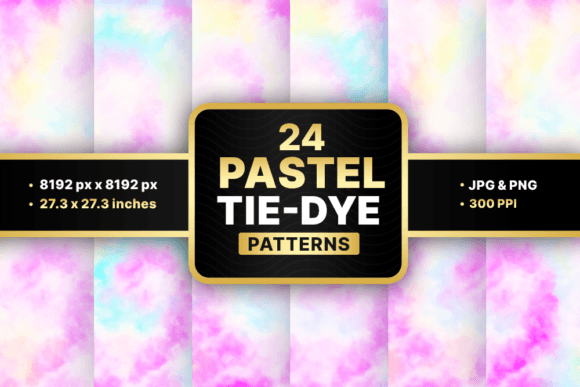
The core value of this collection lies in its specifications and versatility. The set includes 24 distinct pastel tie-dye patterns, each provided in both PNG and JPG formats at a high resolution of 300ppi. With dimensions of 8192 x 8192 pixels (equivalent to 27.3 x 27.3 inches), these files offer the necessary scale for large-format printing while remaining manageable for digital screens. Understanding where these assets fit into your broader process requires looking beyond the aesthetic and focusing on the logistical advantages they provide.
Strategic Asset Integration in Production Cycles
For professionals managing multiple projects, the time spent sourcing, editing, and testing textures can significantly impact efficiency. Incorporating Pastel Tie-Dye Patterns into a project timeline allows creators to bypass the lengthy process of manually creating background textures or hiring illustrators for custom designs. This shift enables a focus on higher-level tasks such as strategy, client communication, and final quality control.
The integration of these patterns typically occurs during the conceptualization or pre-production phase. When planning a new line of merchandise, such as tote bags or zipper pouches, having a library of pre-approved, high-resolution backgrounds allows for rapid prototyping. Instead of waiting for a design to be rendered from scratch, a designer can immediately apply one of the 24 available patterns to a mockup. This accelerates the feedback loop with clients, allowing for quicker iterations and faster decision-making regarding color palettes and market positioning.
Furthermore, the availability of both PNG and JPG formats addresses different technical requirements within a workflow. The PNG format, which supports transparency, is essential when layering the pattern over other elements or applying it to objects with irregular shapes. Conversely, the JPG format is ideal for scenarios where file size optimization is necessary without sacrificing the 300ppi print quality required for professional output. This dual-format approach ensures compatibility across various software platforms and hardware constraints.
Practical Applications Across Diverse Industries
The utility of these patterns extends far beyond simple decoration. They serve as foundational elements in several specific use cases, each requiring a slightly different approach to implementation.
- E-commerce and Product Packaging: For entrepreneurs selling physical goods, presentation is paramount. Using these patterns for gift wrapping or notebook covers adds a premium feel to unboxing experiences. The high resolution ensures that the texture remains crisp even when printed on large rolls of paper, maintaining brand consistency and perceived value.
- Stationery and Educational Materials: Educators and content creators can utilize these backgrounds to create visually soothing workbooks, planners, or digital worksheets. The soft pastel tones reduce cognitive load compared to high-contrast graphics, making them particularly effective for learning environments or productivity tools.
- Digital Content Creation: Bloggers and social media managers can leverage these images as wallpapers or background overlays for video content. The 8192 x 8192 dimension provides ample room for cropping and composition adjustments, ensuring that the final image looks professional on any device screen.
- Home Decor and Personalization: Small business owners specializing in home decor can apply these designs to throw pillows and tumbler wraps. The seamless nature of the design concept (even if the specific files are non-seamless) allows for creative placement on various substrates, turning standard items into unique, artisanal products.
Navigating Technical Constraints and Quality Control
A critical aspect of implementing any digital asset is understanding its limitations and working within them effectively. It is important to note that these patterns are non-seamless. While this might initially seem like a drawback for certain applications, it actually dictates a specific method of usage that can enhance the final outcome. Because the edges do not automatically tile perfectly, designers must treat each pattern as a single, contained artwork rather than an infinite texture.
This distinction influences how the patterns are applied in real-world scenarios. For instance, when designing a tumbler wrap or a zipper pouch, the non-seamless nature allows for a focal point design. The user can center the pattern on the object, ensuring that the most vibrant part of the tie-dye effect is visible, rather than worrying about repeating tiles that might look repetitive or artificial. This approach favors intentional composition over mechanical repetition.
Quality control in the printing process relies heavily on the 300ppi specification. When moving from digital design to physical production, whether through a home inkjet printer or a commercial offset press, maintaining this resolution is non-negotiable. The 27.3 x 27.3-inch size offers flexibility; it allows for scaling down to smaller items like stationery without pixelation, while also providing enough data to crop sections for larger prints. However, users must ensure their print settings match these specifications to avoid blurriness or compression artifacts.
Optimizing Workflow Efficiency
To maximize the return on investment for these assets, organization and preparation are key. Before starting a project, categorize the 24 patterns based on color temperature and intensity. Grouping similar hues together can speed up the selection process when brainstorming color schemes for a cohesive brand identity. This organizational step reduces the cognitive friction of searching through a large file library.
When integrating these patterns into a larger project, consider the interaction with other visual elements. Pastel tones are generally low in saturation, which makes them excellent supporting players. They should be paired with bold typography or solid accent colors to ensure readability and visual hierarchy. In a marketing campaign, for example, a pastel tie-dye background can provide a soft, inviting atmosphere that allows the call-to-action text to stand out clearly.
Efficiency is further enhanced by establishing a standard operating procedure for file management. Since the files are large (high resolution), storage space can become a bottleneck. Implementing a system where only the necessary formats are kept on active drives, while backups are stored elsewhere, helps maintain system performance. Additionally, creating a master template with the patterns already embedded can save significant time for recurring projects, such as weekly newsletters or monthly product drops.
Long-Term Value and Adaptability
The longevity of a design asset depends on its adaptability to changing trends and platform requirements. Pastel Tie-Dye Patterns offer a timeless aesthetic that aligns well with current movements toward soft minimalism and nostalgic retro styles. Unlike highly saturated neon trends that may fade quickly, pastels have a broad appeal and a longer shelf life in the design world.
This adaptability makes the collection a valuable long-term resource. As a creator's portfolio grows, having a consistent library of high-quality backgrounds allows for a unified visual language across different mediums. Whether transitioning from digital-only products to physical merchandise, or expanding from personal blogs to corporate presentations, these patterns provide a reliable foundation.
Ultimately, the successful implementation of these patterns comes down to thoughtful application. By respecting the technical specifications, understanding the non-seamless nature of the files, and strategically placing them within a workflow, professionals can achieve results that are both aesthetically pleasing and commercially viable. The goal is not just to use a pretty image, but to integrate a tool that enhances the overall quality and efficiency of the creative process.
Whether you are wrapping a gift for a loved one, designing a new line of eco-friendly notebooks, or creating a calming digital background for a webinar, the right texture can elevate the entire experience. With 24 unique options ready for immediate use, the barrier to entry for high-quality design is lowered, allowing more creators to focus on what matters most: the message and the medium.